How HSA Reimbursement Works for Canadian Employees
Employers set annual credit limits and employees spend them on CRA-eligible medical expenses.
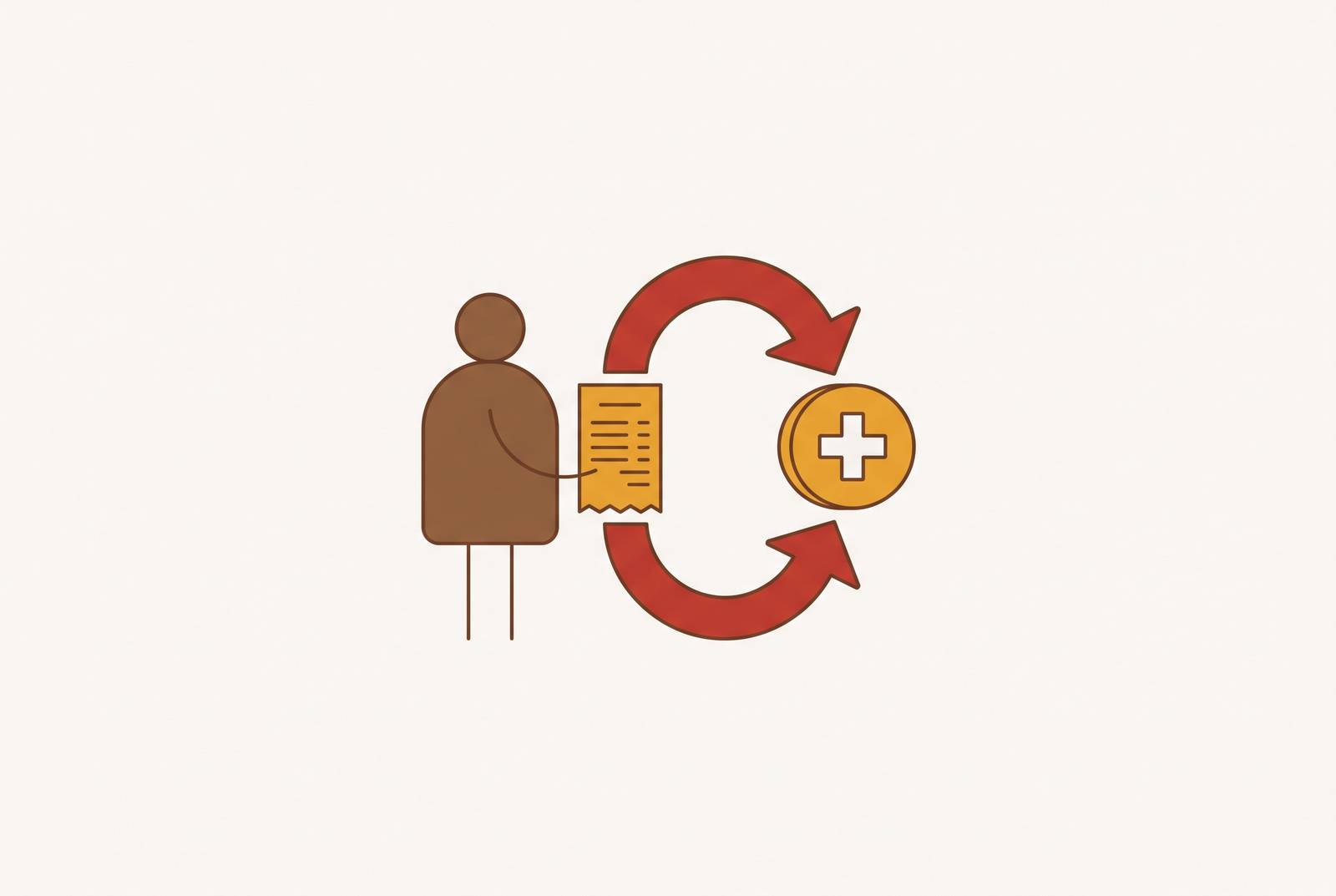
A health spending account is a CRA-recognized, employer-funded reimbursement plan. It is not an insurance policy, and that distinction shapes everything about how employees experience it. Instead of filing a claim against a carrier and waiting to see what percentage of a bill gets covered, the employee works from a fixed annual credit set by the employer. The CRA calls these arrangements health care spending accounts, or HCSAs, and treats a plan built from them as a self-insured private health services plan, or PHSP. There are no monthly premiums, no co-pays, no deductibles, and no percentage-based coverage limits attached to specific categories. The employee simply has a dollar balance and spends it on any CRA-eligible medical expense as the need comes up.
Traditional group insurance works differently: it insures specific categories, like prescription drugs or major dental, at set percentages, with the insurer absorbing the risk across a large pool of people. An HSA replaces that structure with a single dollar pool the employee directs. Many employers run both at once, pairing a core group plan for high-volume items like prescription drugs and major dental with an HSA that covers the gaps, the co-pays, and the expenses the core plan caps out on. Understanding this pairing matters before anything else, because every step that follows, from paying a provider to getting reimbursed, only makes sense once the employee knows they're drawing from a balance, not filing against a policy.
How the employer sets the annual credit
Before an employee can submit a single claim, the employer has to build the plan. That means deciding who is covered, how much each employee can claim during the benefit year, and what happens to any money that goes unused. The employer sets an annual spending limit per employee, and the methods vary: a flat amount for everyone, tiers based on role or seniority, or a pro-rated amount for part-time staff and new hires joining partway through the year.
Whatever the employer lands on becomes the employee's available credit for that benefit year. The employee has no input on the size of that allocation. Their choice is limited to how they spend it within the categories CRA allows. The CRA doesn't set a hard dollar cap on these allocations, but it does expect the amounts to be reasonable and consistent across similar groups of employees. Allocations that look disproportionate compared to an employee's role can draw audit attention.
Rollover treatment also gets decided at this stage, so employees should find out whether unused credits carry forward before the benefit year begins, not after it closes. The most common approach lets unused credits from one year carry into the next, where they then expire if still unused. Some employers run a stricter use-it-or-lose-it model with no carryforward. Either way, the plan has to be documented formally, usually through a third-party provider. A written plan document is required to qualify as a legitimate PHSP under the Income Tax Act, and self-administered internal policies face far more CRA scrutiny; unincorporated businesses aren't permitted to run one.
Which expenses qualify under the CRA eligible list
An HSA can reimburse any medical expense eligible under the Income Tax Act, the same list that governs the Medical Expense Tax Credit. That list is wide. It includes prescription drugs, dental services from cleanings to orthodontics to implants, vision care such as eye exams, glasses, contacts, and laser surgery, physiotherapy, chiropractic and massage therapy, hearing aids, mental health practitioners like psychologists and registered social workers, medical devices such as orthotics and braces, fertility treatments, and ambulance fees. These expenses don't have to belong to the account holder alone. A spouse, common-law partner, or dependent child's expenses all qualify under the employee's HSA, subject to the same CRA rules.
Medical travel has its own thresholds. For travel of at least 40 km but less than 80 km one way, qualifying transportation costs may be eligible. For travel of 80 km or more one way, transportation, accommodation, meals, and parking may all qualify.
The exclusions are where employees most often get tripped up. Cosmetic procedures with no medical purpose don't qualify, nor do gym memberships, vitamins without a prescription, or over-the-counter drugs bought without one. A Personal Spending Account, sometimes called a PSA or WSA, exists to cover wellness and lifestyle costs like gym memberships, but reimbursements from that kind of account are taxable to the employee. Mixing non-health items into an HSA is the most common compliance mistake employees and employers make, and it puts the plan's tax-free status at risk. When an expense looks borderline, the safer move is to check the CRA's published list of eligible medical expenses or ask the plan administrator before submitting anything.
Step one: paying the expense out of pocket and getting a usable receipt
The process starts the moment an employee pays a provider directly, whether that's out of pocket or with a benefits card if the plan issues one. Whether the eventual claim gets approved depends on what happens in the next few minutes, while still at the provider's office. A usable receipt needs to show the date of service, the provider's name, the type of service, and the amount paid.
A standard credit card terminal slip doesn't satisfy this on its own. It confirms that a payment happened, but it says nothing about what was purchased or who provided it. The CRA doesn't require receipts to be filed with an annual tax return, but itemized documentation needs to be kept on hand in case of an audit. Photograph or upload the receipt right after the appointment, before it fades in a wallet or gets lost in a bag. Employees who wait weeks to submit a claim are the ones most likely to find the receipt missing when they finally go looking for it.
Step two: submitting the claim through the plan administrator's portal
Once the receipt is in hand, submitting the claim is quick. The employee logs into the administrator's online portal or mobile app, uploads the receipt or invoice, and submits the claim against their HSA balance. Most administrators support direct photo uploads from a smartphone, so there's no need to scan or print anything.
The submission itself needs a few details: the provider's information, the date of service, the expense category, and the amount paid. The employee can track their remaining balance through the same portal, and most platforms show the credit left before the plan year closes. Claims deadlines vary by plan and often fall within 60 to 90 days after the expense, so prompt submission avoids receipts piling up.
Step three: how the plan administrator adjudicates the claim
Between submission and reimbursement sits a review stage that can feel opaque from the employee's side, but it serves a clear purpose. The administrator checks the expense against CRA's eligible list, confirms the employee has enough balance to cover it, and reviews the documentation that came in with the claim. Turnaround typically runs two to five business days, and claims with complete documentation in a straightforward category often move faster.
From there, the claim lands in one of three places: approved, partially approved if the balance can't cover the full amount, or declined if the expense doesn't meet CRA's rules. This step exists to protect the plan's tax-free status. By enforcing CRA's eligible expense list at the point of review, the administrator keeps non-qualifying expenses from ever being reimbursed tax-free, a mistake that would threaten the plan's standing as a PHSP. If a claim comes back declined, the employee isn't out of options: the expense can still be paid out of pocket, and any unreimbursed eligible expense may qualify for the Medical Expense Tax Credit on the personal T1 return. Anyone facing a decline should ask the administrator which specific CRA rule the expense failed, and whether something like a practitioner's letter could change the result.
Step four: receiving tax-free reimbursement
Once a claim clears adjudication, the money moves fast. Approved claims get deposited directly into the employee's bank account, a statement of benefits goes out, and the HSA balance updates to reflect the new total. The reimbursement is not reported as taxable income. It isn't reported on the T4 slip, and there's no co-pay, no percentage coverage, and no deductible standing between the employee and the full reimbursed amount, as long as the expense was eligible and the balance covered it.
On the employer's side, the mechanics run in parallel and mostly out of the employee's view. The administrator processes a pre-authorized debit from the employer's business account covering the claim, the administration fee, and applicable taxes, triggered automatically once an invoice generates, with no manual transfers required. The full invoice amount, the claim itself, the administration fee, and GST, counts as a deductible business expense for the employer. Fee structures vary across administrators, but a common model charges a percentage, such as 8%, on approved claims only, with no setup or annual fee, so the employer pays nothing when no one submits a claim.
Why HSA reimbursements are tax-free under PHSP rules
The tax-free treatment an employee enjoys rests on the plan qualifying as a Private Health Services Plan under the Income Tax Act, a status that depends on conditions the employer and administrator have to meet long before any claim gets submitted. When a plan meets those conditions, employer contributions become a non-taxable benefit: reimbursements aren't income, they don't show up on the T4, and they aren't subject to federal tax.
A handful of CRA conditions hold this status together. The expenses covered have to be medical and hospital expenses as defined in the Income Tax Act. For a self-insured plan, at least 90% of the benefits paid out to all employees in a calendar year have to be for expenses eligible under the medical expense tax credit. The plan needs to function in the nature of insurance, an undertaking to indemnify against loss from an uncertain event for agreed consideration. Coverage has to stay within the employee, their spouse or common-law partner, and household members connected by blood, marriage, or adoption. And reimbursements have to flow through the corporation, not directly from an owner's personal account.
None of this is something an employee has to manage directly. Meeting these conditions is the employer's and administrator's job. But understanding that they exist explains why an administrator declines a claim rather than just paying it: a plan that reimburses non-eligible expenses, like gym memberships or cosmetic procedures, risks losing its PHSP status altogether, which would turn every reimbursement that year into a taxable benefit retroactively. Adjudication is the mechanism that keeps the whole arrangement tax-free.
The Quebec exception to the employee's tax picture
Quebec employees run into a different outcome than the rest of the country. HSA reimbursements stay exempt from federal tax everywhere in Canada, but Revenu Québec treats employer contributions to a PHSP as taxable benefit income at the provincial level. In practice, that means the reimbursement doesn't get added to federal income, but it does show up as provincial taxable income on the employee's Quebec tax return.
This reduces the net tax advantage for Quebec employees compared to colleagues in other provinces, though it doesn't erase the value of the HSA for them. Employees filing a TP-1 return in Quebec should account for this provincial treatment when reporting, and anyone unsure how to handle it should talk to a tax professional. Employers with Quebec-based staff should flag this difference clearly when explaining the benefit, so no one is caught off guard at tax time.
What happens to unused HSA credits at year-end
What happens to credits an employee doesn't spend comes down entirely to how the employer built the plan. There's no CRA-mandated rollover rule, so the terms differ from one workplace to the next, and employees should know those terms before the benefit year runs out. The most common setup lets unused credits from one year roll into the next, where they then have to be used before they're forfeited. Other plans run strict use-it-or-lose-it, with nothing carried forward.
One rule holds across every compliant plan regardless of rollover design: unused benefits can't be converted to cash. A CRA-compliant HSA doesn't allow participants to cash out a balance or carry it indefinitely, which is often the exact flexibility employees might wish for. That restriction isn't a flaw in the design, it's a requirement for the plan to keep its PHSP status. The practical move for employees is straightforward: check the plan's rollover rule at the start of each benefit year, keep an eye on the remaining balance through the administrator's portal, and submit any pending claims well ahead of the deadline.
The HSA's interaction with the Medical Expense Tax Credit
An employee can't claim both an HSA reimbursement and the Medical Expense Tax Credit for the same expense. If the HSA already covered something with tax-free dollars, claiming it again through the METC counts as double-dipping, and CRA doesn't allow it. But once the HSA balance runs out, any additional eligible expenses paid out of pocket can still go on the personal T1 return under the METC.
The METC itself provides a non-refundable federal tax credit worth 14% of eligible expenses above the lesser of 3% of net income or $2,890 in 2026. That's a smaller benefit than a full HSA reimbursement funded with pre-tax corporate dollars, but it still matters for employees carrying high medical costs. The practical sequence for anyone with significant out-of-pocket spending: claim everything possible through the HSA first, then apply the METC to whatever remains at tax time. Some employees treat this as a built-in two-tier system, using the employer-funded HSA for routine medical spending and leaning on the METC as a backstop once that credit limit is reached.
Handling a declined claim or a low balance
A declined claim or a balance that doesn't stretch far enough isn't a dead end. Employees facing a decline should ask the administrator exactly which CRA rule the expense failed, and whether extra documentation, such as a practitioner's prescription, a referral, or a letter of medical necessity, would change the outcome, since some expenses need documentation beyond the original receipt. If the expense turns out to be genuinely ineligible under CRA rules, no administrator can reimburse it tax-free, so the better path is to pay it out of pocket and, if the total qualifies, fold it into METC calculations on the personal return.
When the issue is balance rather than eligibility, the plan can partially approve a claim up to whatever remains, leaving the employee to cover the shortfall directly, and that unreimbursed portion may still be eligible for the METC. Employees who find themselves running out of credits before the benefit year ends should ask the employer to increase the allocation at the next plan review, rather than trying to stretch the balance by submitting expenses that don't actually qualify. For anyone managing larger or less frequently used expenses, like fertility treatment, orthodontics, or laser eye surgery, submitting those claims earlier in the benefit year reduces the odds of running short later, when the balance has already absorbed smaller, routine costs. Real-time balance tracking through the administrator's portal makes that kind of pacing possible, turning what could be a guessing game into a plan an employee can actually follow.