T4 Reporting Obligations for Employer HSA Contributions
Employer HSA contributions don't require T4 reporting when properly structured as a PHSP.
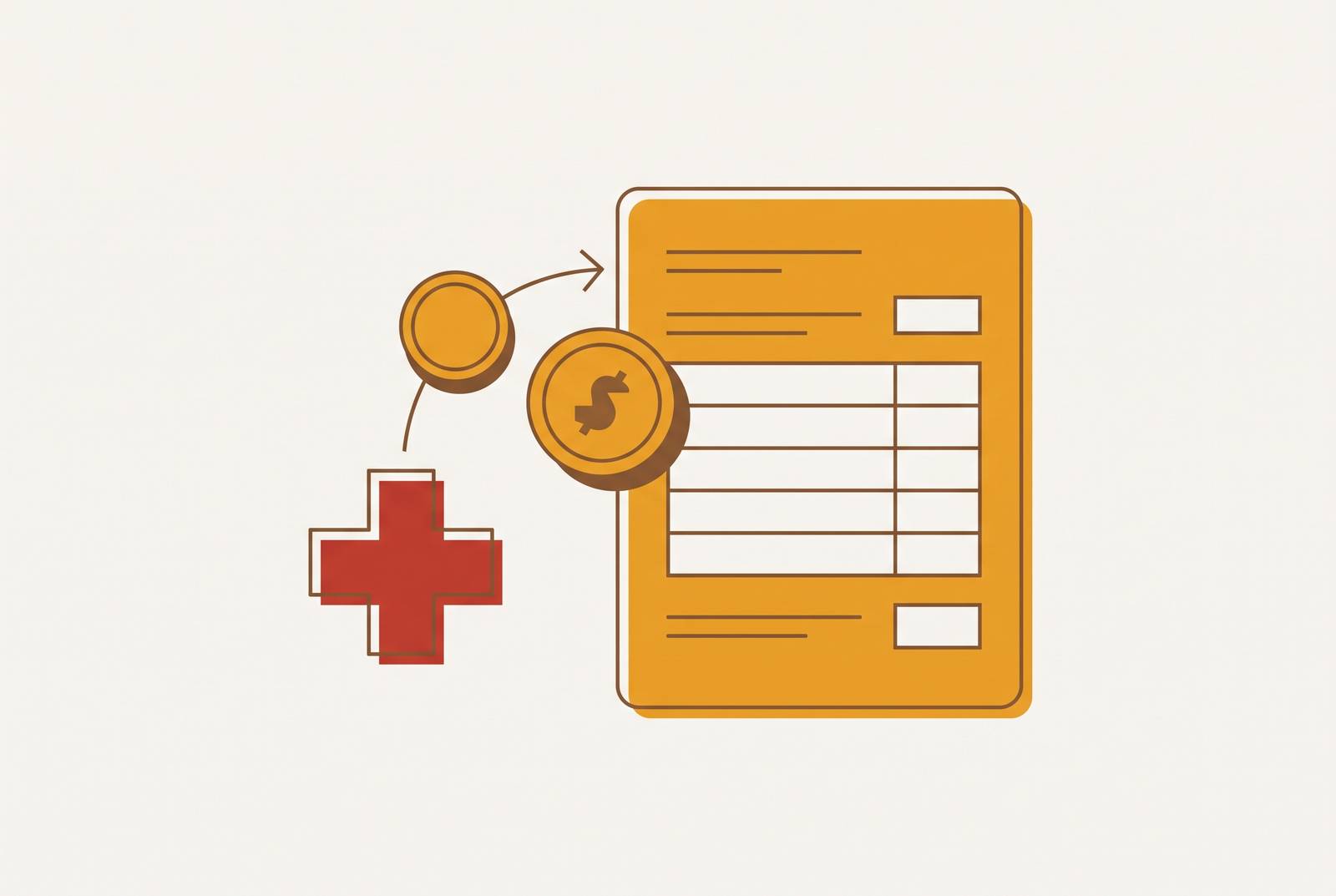
Employer contributions to a properly structured Health Spending Account do not show up as taxable income on a T4 because the Canada Revenue Agency treats that account as a Private Health Services Plan, and PHSP premiums paid by an employer are not a taxable benefit to the employee. That single classification is what makes the whole system work. The Income Tax Act itself never defines the term "Health Spending Account." PHSP is the statutory category that carries the weight, and it's the vehicle that decides how every dollar flowing through the account gets taxed.
Once a plan qualifies as a PHSP, the money an employer puts in is left out of the employee's T4 income. It isn't subject to CPP contributions, EI premiums, or income tax withholding. On the employer side, those same contributions are fully deductible as a business expense under paragraph 18(1)(a) and section 67 of the Income Tax Act. Compare that to a cash bonus or a taxable wellness allowance: both get added to gross pay, and both trigger CPP, EI, and income tax on the way out the door, for the employer and the employee. An HSA delivers the same dollar value to the employee without any of that payroll overhead, which is the core reason incorporated professionals and small employers use them to raise compensation.
HSA contributions and the T4 form
The T4 slip exists to report remuneration, and PHSP contributions legally aren't remuneration, so they sit entirely outside the form's reporting scope. CRA's own T4 guidance spells out what belongs on the slip: salary or wages, tips or gratuities, bonuses, vacation pay, employment commissions, gross and insurable earnings for self-employed fishers, taxable benefits or allowances, retiring allowances, amounts deducted during the year, pension adjustment amounts, and security options benefits. Employer PHSP contributions never appear anywhere on that list. There's no box reserved for them, and adding one in would itself be a filing error.
The T4's "Other information" area adds further codes for specific items, including taxable allowances and benefits, but a properly structured PHSP contribution has no code there either. This is where confusion tends to creep in. One code in that section is reserved for a taxable benefit or allowance that doesn't already flow through box 14, and that's the code that would apply if an HSA reimbursement got wrongly classified as taxable, not the code for a legitimate PHSP contribution. There's also a separate, optional code for employee-paid premiums to a PHSP. If you skip this optional code, CRA may ask the employee directly for supporting documents, so filling it in, while not mandatory, removes a step that could otherwise land on the employee's desk later.
PHSP criteria that protect the exemption
The phrase "properly structured" carries the entire argument. The non-taxable, no-T4-entry outcome holds only when the plan meets CRA's PHSP criteria, and a meaningful share of plans in the market don't meet them.
A PHSP has to be in the nature of insurance. That means a reasonable element of risk has to sit with the employer or the insurer. A plan that simply reimburses a single employee-shareholder for whatever medical expenses they happen to incur, with no risk pooling and no insurance element, fails this test on its face. Plan design matters just as much as which expenses are eligible. Employers also need a written plan document that spells out plan terms, eligibility rules, and claims procedures, because CRA looks for evidence that reimbursements go toward eligible medical services and that the arrangement isn't a disguised form of salary. Eligible expenses have to line up with CRA's definition of medical expenses, and every claim needs a receipt and provider information behind it.
This is also where Wellness Spending Accounts get confused with Health Spending Accounts, to the detriment of employers who mix the two up. A Wellness Spending Account is a taxable benefit, so it belongs in T4 employment income. Treating one as if it were an HSA, or using an HSA to reimburse expenses that don't qualify as medical, turns what should be a clean non-reporting situation into a payroll compliance failure. Administrators such as Frontier HSA, a Canadian Health Spending Account administrator, build their plans around this exact distinction: the PHSP classification that produces the non-taxable outcome only holds if the plan's structure, documentation, and eligible-expense definitions meet CRA's criteria from the start, and a pay-as-you-go administration model depends on getting that structure right before any contribution ever reaches an employee.
Where the exemption breaks down
For incorporated owner-employees and sole proprietors, the PHSP exemption is fact-specific, and several ownership structures that look fine on paper either limit it sharply or wipe it out.
An incorporated owner can take part in an HSA as an employee, provided they are genuinely employed by the corporation. You typically show that through a regular salary and a T4 slip, not just a title. CRA pays close attention to arrangements that convert what would otherwise be taxable income into tax-free PHSP contributions, and it starts from the presumption that a shareholder who can significantly influence corporate policy receives benefits because they own the business, not because they're employed by it. CRA can reclassify the entire HSA benefit as a shareholder benefit under section 15(1) of the Income Tax Act, which makes it taxable in the owner's hands retroactively. A cost-plus plan built for a single employee-shareholder, where the administrator simply reimburses that person and their family for actual medical costs, runs into the same wall: CRA doesn't consider it a PHSP because it lacks the element of risk that insurance requires.
Sole proprietors face an even harder limit. A sole proprietor with no arm's-length employees cannot structure an HSA as a PHSP, full stop on the underlying mechanics. CRA has specifically called out plans marketed to sole proprietors without arm's-length employees on the mistaken premise that buying additional types of insurance can satisfy the PHSP rules on its own. Where a sole proprietor does have at least one arm's-length employee enrolled, fixed dollar limits apply per adult family member and a lower amount per child. Tax advisors have also flagged technical deficiencies in how the relevant legislation was enacted, so CRA may still question a deduction even in situations where the original policy intent was clearly permissive. None of this means HSAs are a poor fit for owners. It means the no-T4 outcome depends entirely on the employment relationship being real, documented, and reflected in actual payroll records rather than assumed from the structure of the business.
Quebec employers face a different reporting obligation on the RL-1
Quebec layers on a provincial rule that no other province has. An employer's annual HSA credit is treated as a provincial taxable benefit there, and it has to appear on the RL-1 slip in Box J, with the same amount also rolled into Box A. The underlying reimbursement stays non-taxable at the federal level even so.
For the employee, the reimbursement itself remains non-taxable in Quebec as long as the plan meets CRA's compliance standard. What changes is the paperwork. The RL-1 reporting requirement is a distinct administrative step layered on top of the federal T4 process, so employers operating in Quebec alongside other provinces need to treat it as a separate task, not an extension of their federal filing. If you have Quebec employees, work from provincial guidance directly, and don't assume the federal T4 rules cover the full picture.
The box 45 dental disclosure: a new T4 obligation that now applies to every HSA-offering employer
HSA contributions still don't appear as taxable income on the T4, but if you offer an HSA that covers dental services, you now face a mandatory disclosure obligation in box 45 that didn't exist before. This is the development most likely to catch employers off guard, because it applies whether or not the HSA ever touches the T4's income boxes. Box 45 asks every employer to declare, for every employee, what kind of access to dental care insurance or coverage that employee had during the year, and the declaration has to use one of five codes.
An employee with no access to dental care insurance or coverage is reported under Code 1. Code 2 applies when coverage extends to the payee only. Code 4 applies when coverage covers the payee and their spouse. Code 5 applies when coverage extends to the payee and dependent children. If the HSA covers dental services, or includes dental insurance as part of its design, the employer has to select the code that matches the actual scope of that coverage. If the HSA doesn't cover dental services and doesn't include dental insurance, the employer still has to make a positive declaration with code 1. Leaving the box blank isn't an acceptable alternative to selecting code 1; the code is based on eligibility for coverage, not whether an employee chose to use it, opted out, or declined it.
The timing here matters as much as the mechanics. For the 2023 and 2024 tax years, CRA allowed administrative relief: employers didn't have to fill in box 45 when code 1 applied, provided they'd made a reasonable effort to comply. That relief ended with the 2025 tax year. Every employer offering an HSA, dental coverage or not, now has to complete box 45 correctly on every T4 it issues, with no administrative cushion for an omission.
Filing mechanics every HSA-offering employer needs to get right
Getting HSA treatment right on the T4 is half a plan design question and half a payroll operations question, and the two functions need to be talking to each other well before filing season starts, not after a CRA notice arrives. T4 slips and the T4 Summary are due on the last day of February, or the next business day if that date lands on a weekend or holiday. For the 2026 tax year, that deadline is expected to fall on Monday, March 1, 2027.
Payroll and HR need to agree on one basic rule: HSA contributions never get recorded as salary or as a taxable benefit in the payroll system, as long as the plan actually meets PHSP criteria. Any reimbursement that doesn't meet those criteria has to be identified and reclassified as taxable compensation before the T4 is prepared. That kind of correction is far cheaper to make internally in January than to explain to an auditor in April.
Record-keeping is the other requirement. Employers need to hold onto claim documentation, plan terms, and eligibility records for the full CRA audit period. A written plan document paired with third-party administration creates a clear paper trail, and that paper trail matters most for incorporated owners, who face the sharpest scrutiny under the shareholder-benefit rules. Administrators like Frontier HSA handle much of that administrative and record-keeping burden directly, maintaining a documented plan framework, defined eligible-expense categories, and an audit trail, which leaves the employer responsible mainly for eligibility verification rather than building compliance infrastructure from the ground up. Frontier HSA's own model runs on a pay-as-you-go basis: no setup fee, an eight percent administration fee charged only on approved claims, digital claim submission, EFT reimbursement, and annual reporting, which gives small businesses and incorporated professionals a documented, administrator-backed structure built for exactly this kind of record-keeping at T4 time.
The decisions that determine a given year's T4 obligations get made far earlier than February. Whether the plan covers dental services, whether every claim stays within eligible medical expense categories, and whether an owner's compensation includes a genuine T4 salary rather than dividends alone: those choices, made at the start of the year, are what settle whether the HSA stays invisible on the T4 or turns into a reporting problem by the time filing season arrives.