HSA Carry-Forward and Rollover Rules in Canada
Canadian HSAs expire on strict timelines, unlike their American counterparts.
Most people who lose their unspent HSA credits didn't forget to file a claim. They misread the rules, usually because they're applying the wrong country's playbook to their own plan. The American HSA is a completely different animal: individually owned, invested, and it follows the employee from job to job. The Canadian version belongs to the employer, expires on a schedule, and caps how long money or claims can sit around waiting to be used. US-based HR software and the rise of cross-border remote work have only made that gap harder to see, not easier. A Canadian HSA is formally a reimbursement plan recognized by the CRA as a Private Health Services Plan, letting an incorporated business cover eligible health and dental expenses for employees, and in some cases business owners, in a tax-efficient way.
Search "HSA rollover rules" from a Canadian browser and American guidance dominates the results. Employees read it, assume their balance rolls over indefinitely, then discover at year-end that it has expired. Even Canadian providers muddy the water further: some use "rollover" to mean unused credits carry forward, others use the same word to mean unused claims carry forward. Those are not interchangeable concepts, and mixing them up is where a lot of the confusion actually starts.
Why the CRA requires a time limit on HSA funds
The 12-month carry-forward window isn't an administrator's rule of thumb. Skipping it costs the whole plan its tax-free status, not just some of its generosity.
A Canadian HSA gets tax-free treatment because it meets the CRA's definition of a Private Health Services Plan under the Income Tax Act. To hold that status, the plan has to carry actual risk, which under CRA guidance means a spending or benefit limit tied to a defined period of time. Without that limit there is no risk, and the arrangement becomes a taxable benefit to the employee. This isn't guesswork: subsection 248(1) of the Income Tax Act defines what a PHSP is, and CRA Interpretation Bulletin IT-339R2, along with IT-529, spell out how the notional credit model has to work in practice. CRA IT-529, titled Flexible Employee Benefit Programs and dated February 20, 1988, explains that limiting how long credits can carry forward is necessary because a PHSP must function as a plan of insurance and therefore involve an element of risk to the plan member.
An employer who lets credits pile up with no expiry date isn't being generous. That compliance risk sits with the employer and the plan administrator, not the employee, but understanding why the clock exists helps explain why no provider can simply turn it off.
The two carry-forward models the CRA permits
The CRA allows two carry-forward structures, plus a third option with no carry-forward at all. A plan has to pick one at setup. It can't run both at once, and it can't switch later once the plan is live. A provider can choose to offer either model, or even both models, as part of its product line, but the choice locks in at setup.
Claims carry-forward (expense carry-forward). An eligible expense incurred in one benefit period can be submitted for reimbursement using funds contributed in the next benefit period. This helps an employee who runs out of credits mid-year but still has a receipt to submit. They hang onto that claim and cash it in once fresh funds land. Balances themselves reset every year, so any unspent credit is gone at year-end. From the employee's side, it behaves like a strict use-it-or-lose-it account. Blendable, writing through Advisor Nation, uses this model for its HSA Select product built for incorporated individuals, where the plan sponsor and the sole plan member are the same person, so the forfeiture risk barely matters in practice.
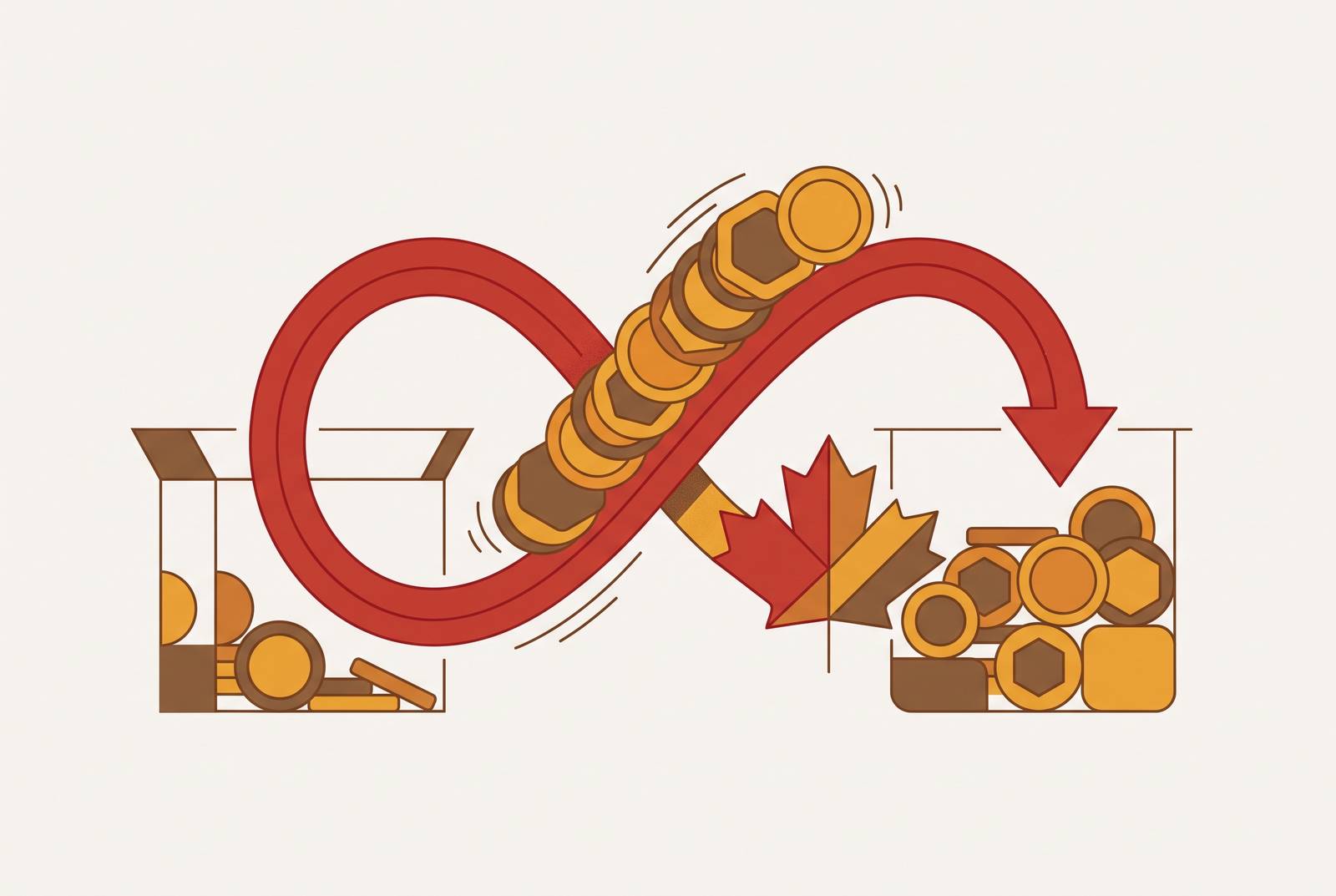
Balance carry-forward (credit carry-forward). Here, unused employer contributions roll from one benefit period into the next, and funds can live in the account for a maximum of two benefit periods before they're gone. An expense from either period can be reimbursed using money from that period or the one before it. This structure is built for the employee who's planning something big and expensive, orthodontic work, laser eye surgery, a costly paramedical treatment, and wants to build up a balance across two years instead of losing it. Blendable applies this model across its Group HSA lineup (HSA Classic, HSA Rollback, HSA Rollover, HSA Advanced, HSA Wellness), arguing it cuts down the use-it-or-lose-it pressure employees feel. Other providers describe the same mechanics: credits that roll into year two and still go unclaimed after that second year expire under CRA rules.
None of this is a menu employers get to customize. The mutual exclusivity is a CRA constraint that plan administrators must respect when they design the product. Whichever model gets chosen, the ceiling is the same: 12 months for credits, or 12 months for claims, never both stacked together and never longer.
What happens to unspent credits when the rollover period ends
Under a balance carry-forward plan, the mechanics run in a fairly simple sequence. Unused credits from Year 1 roll into Year 2. Whatever's still sitting there unclaimed at the end of Year 2 expires.
One published example from Coastal HSA lays this out well: an employee spends most of their allocation in Year 1, carries the leftover into Year 2, and if that leftover isn't claimed by the end of Year 2, it's forfeited. The same example cuts the other way too. Unused Year 2 credits (not the ones carried over from Year 1) roll into Year 3. An employee with low spending in a given year can build up a real balance for something bigger down the road.
Forfeited credits don't vanish into some neutral pool and they don't get redistributed among other employees. They revert to the employer. The employer simply never pays out the portion nobody claimed, which is how providers like Quikcard structure the return of unused funds. Some plans skip carry-forward entirely and run strict use-it-or-lose-it terms, where anything left at year-end disappears immediately. That's fully CRA-compliant, just the least forgiving version of the model.
For employers, the open-ended version of balance carry-forward creates its own headache: letting credits accumulate across two periods with no ceiling makes total plan liability much harder to predict. Setting a rollover cap keeps that number forecastable.
Grace periods for submitting claims versus expense carry-forwards
A lot of plans give employees a short window after year-end to file receipts for expenses they already incurred. That's a normal administrative courtesy, and it has nothing to do with expense carry-forward under CRA rules.
Coastal HSA, for instance, sets its claim cutoff at March 31 of the following year. An employee incurs a dental expense in December, the receipt arrives in January, and they submit it before the March deadline closes. The expense itself still happened inside the prior benefit period. Nothing about the carry-forward clock changes because of this window. It doesn't let a new expense incurred after the benefit period draw on old credits, and it doesn't stack on top of whichever carry-forward model the plan already runs.
Employees who confuse this grace period with a genuine carry-forward may sit on legitimate claims until the window shuts, then discover they've lost the reimbursement. Plan documents should spell this out in plain language, something like "submit receipts for last year's expenses by March 1," rather than a vague line about claims carrying forward.
How the carry-forward model affects employees at different life stages
The right model depends entirely on how a workforce actually spends. A structure that suits someone with steady, predictable expenses can quietly shortchange someone saving toward a large, irregular one.
Claims carry-forward fits employees who tend to burn through their credits before year-end and occasionally rack up an expense they can't yet cover. They get to submit that leftover claim once the next round of credits shows up. Balance carry-forward fits the employee eyeing a big future expense, orthodontics, laser eye surgery, a medical device, who wants two years to build up enough credit without losing anything at year-end. Blendable argues this second model is fairer across a whole workforce, since it doesn't punish employees whose health needs happen to be light in a given year.
Workforces rarely split neatly, though. An employer with some employees managing chronic conditions and others facing occasional high-cost needs may find that neither model serves everybody equally well, and that's a real limitation of a system that only allows one choice per plan. The two-year cap can feel arbitrary and penalizes employees who defer something like major dental work into a third year, a real objection that holds up. The CRA hasn't moved on this, though, and plan administrators have zero flexibility past the two-period maximum.
What happens to HSA credits when an employee leaves
Leaving a job usually means leaving unused HSA credits behind. The carry-forward structure doesn't buy any extra time once employment ends.
Most plans treat the termination date as the end of benefit eligibility. The balance doesn't transfer to a new employer, and it isn't cashed out. Some plans build in a short claims window, often a few weeks to a few months, for expenses incurred while the person was still employed, but that's paperwork accommodation, not a benefit extension. Expenses incurred after the termination date aren't eligible, no matter what balance is still sitting in the account.
Whether outstanding claims can be filed for services rendered during employment, and what the deadline is for filing them, should be spelled out in the plan document and the employment agreement. Leaving that ambiguous makes disputes likely. For anyone who sees a departure coming, the only real move is filing every outstanding eligible claim before the last day on payroll. Credits left sitting there after that are gone for good.
The Quebec exception for carry-forward rules
Quebec treats employer HSA credits as a provincial taxable benefit, and that single fact changes the entire value equation for Quebec employees no matter which carry-forward model their plan uses.
In every other province, employer contributions aren't taxable income at all, so reimbursements arrive tax-free both federally and provincially. Quebec breaks from that: the employer's annual HSA allocation appears in Box J of the employee's RL-1 slip and gets taxed at provincial rates, which reduces the after-tax value of the benefit. Quebec goes further and taxes both claims and administration fees as a benefit too, a treatment critics say wipes out most of the point of having an HSA in the first place. Some providers have decided it isn't worth operating in the province at all.
The carry-forward rules themselves don't change in Quebec, since the PHSP framework comes from federal law. But forfeiting unused credits carries a heavier cost there: the employee already paid provincial tax on those credits, so losing them means paying tax on money that never turned into an actual health benefit. Employers with Quebec-based staff owe them a clear explanation of what their HSA is really worth after tax, and a nudge to use their credits inside the carry-forward window rather than letting anything lapse.
How employers should choose and communicate their carry-forward model
Picking a carry-forward model is a decision made once, at setup, and it shapes the plan for as long as it runs. Most employers never treat it as a real decision. They take whatever model their provider defaults to, without checking whether it fits how their workforce actually spends on health care.
That default often mismatches the workforce it's supposed to serve. A company full of employees with steady, moderate expenses might do fine under claims carry-forward. A company with employees quietly saving up for orthodontics, a hearing aid, or a big paramedical course of treatment needs the balance carry-forward model instead, or those employees will keep losing money they earned.
Communication matters just as much as the model itself. Employees need to know, in plain terms, whether their plan carries forward credits or claims, when that window closes, and whether a March filing deadline is a grace period or an actual extension. Quebec employees need the after-tax math spelled out so they understand what forfeiture actually costs them. None of this requires new CRA guidance or a workaround. It requires an employer who reads the plan document closely, matches the model to the people it covers, and says so clearly enough that nobody finds out the hard way in January.